
What Is the Cockroach Janta Party? Inside the Gen Z Movement Testing Modi’s Government
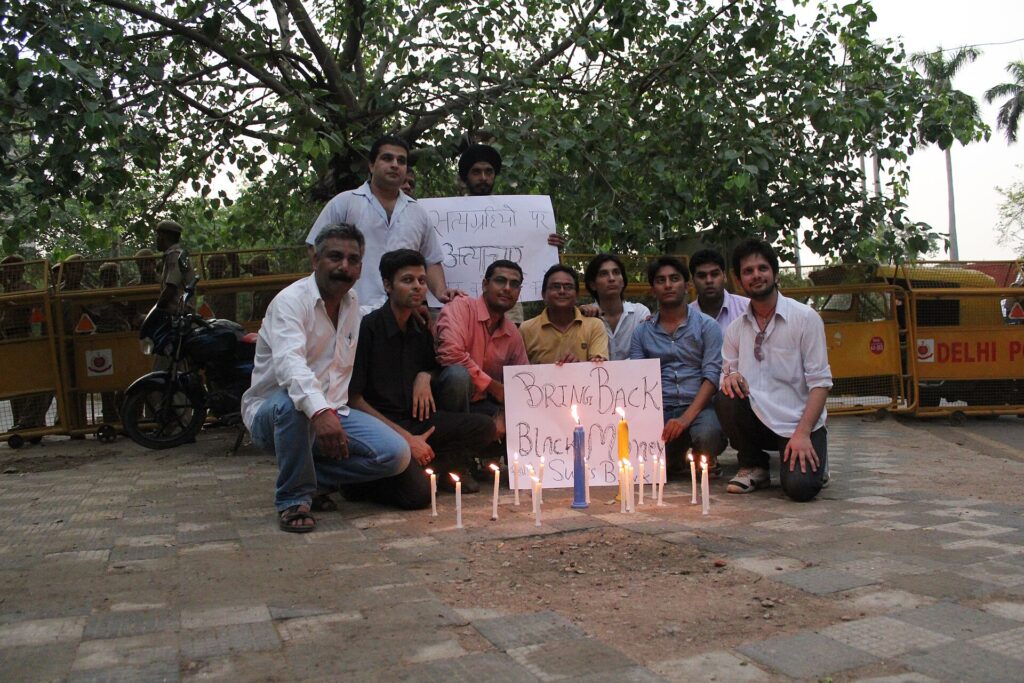
New Delhi, July 2026: Six weeks ago, the Cockroach Janta Party did not exist. Today it has tens of millions of followers, a name that mocks the ruling Bharatiya Janata Party, and protesters camped at Jantar Mantar who say they are not leaving until a cabinet minister resigns. It has been described as the biggest political challenge Prime Minister Narendra Modi's government has faced in years — and it started as a joke.
An insult that backfired
On May 15, 2026, Chief Justice of India Surya Kant, presiding over a Supreme Court bench, remarked that unemployed young Indians were "like cockroaches" who, unable to find jobs, turned to social media, journalism and RTI activism to "attack the system," calling such people "parasites of society."
The remark spread within hours. A day later, the Chief Justice issued a clarification, saying he had been misquoted by parts of the media and had specifically been referring to people who had entered professions such as law using fake degrees — not Indian youth broadly, whom he called "the pillars of a developed India."
The clarification did little to slow what was already moving online.
From a meme to a movement
Abhijeet Dipke, a 30-year-old political communications strategist and Boston University graduate who had previously worked with the Aam Aadmi Party, posted a satirical question on X: "What if all cockroaches come together?" It went viral within hours. On May 16, Dipke turned the joke into a page — the Cockroach Janta Party, its name a direct parody of the BJP.
The growth that followed was fast even by internet standards. A satirical page built on the remark reportedly crossed three million followers within 78 hours. Within two weeks, CJP's Instagram presence had overtaken the BJP's own. By some counts it has since passed 20 million followers, built almost entirely on memes, satire and short-form video.
What the protests are actually about
Satire alone doesn't explain why thousands of young people have been sleeping at Jantar Mantar. The movement's anger found a direct target in two overlapping scandals: a leak of the NEET-UG medical entrance exam paper, and irregularities in the CBSE's on-screen marking and revaluation process that left large numbers of students without clear results for weeks. At least a dozen NEET aspirants are reported to have died by suicide in the aftermath.
CJP's core demands are specific: the resignation of Union Education Minister Dharmendra Pradhan over the exam failures, broader reform of how national exams are conducted, and compensation of Rs 1 crore for the families of students who died by suicide during the crisis.
What began on Instagram moved onto the streets on June 6, spreading beyond Delhi to Pune, Bengaluru and Lucknow. On July 20, police used tear gas and batons to disperse demonstrators trying to march toward Parliament. CJP said the crackdown would not end the protest, and hundreds have continued camping at Jantar Mantar under heavy police presence.
How the government has responded
The government's response has been twofold. Officials reportedly attempted to restrict CJP's social media accounts on national security grounds, without success. Separately, BJP leaders have publicly cast the protesters in adversarial terms — one senior party figure characterized the demonstrators as people who "want to make the country hollow."
CJP and its supporters reject that framing, describing the movement as a demand for accountability rather than an attack on the state: pointing to unemployment, exam-system failures and what they call an absence of consequences for officials as the actual source of the anger.
Why it matters beyond the meme
What makes CJP notable isn't just its size — it's who's showing up. This is a Gen Z-led mobilization organized largely through Instagram and built from institutional failure rather than a traditional party structure or ideology. Commentators have drawn comparisons to youth-led protest movements elsewhere in South Asia in recent years, where economic frustration and a sense of unaccountable governance boiled over into sustained street action.
Whether the Cockroach Janta Party becomes a lasting political force or fades once the immediate exam-scandal grievances are addressed is still an open question. For now, an insult meant to dismiss a generation has become the name they've chosen to organize under.