
Hornbill Festival 2026 Explained: Dates, What Happens at Kisama and How to Plan Your Trip
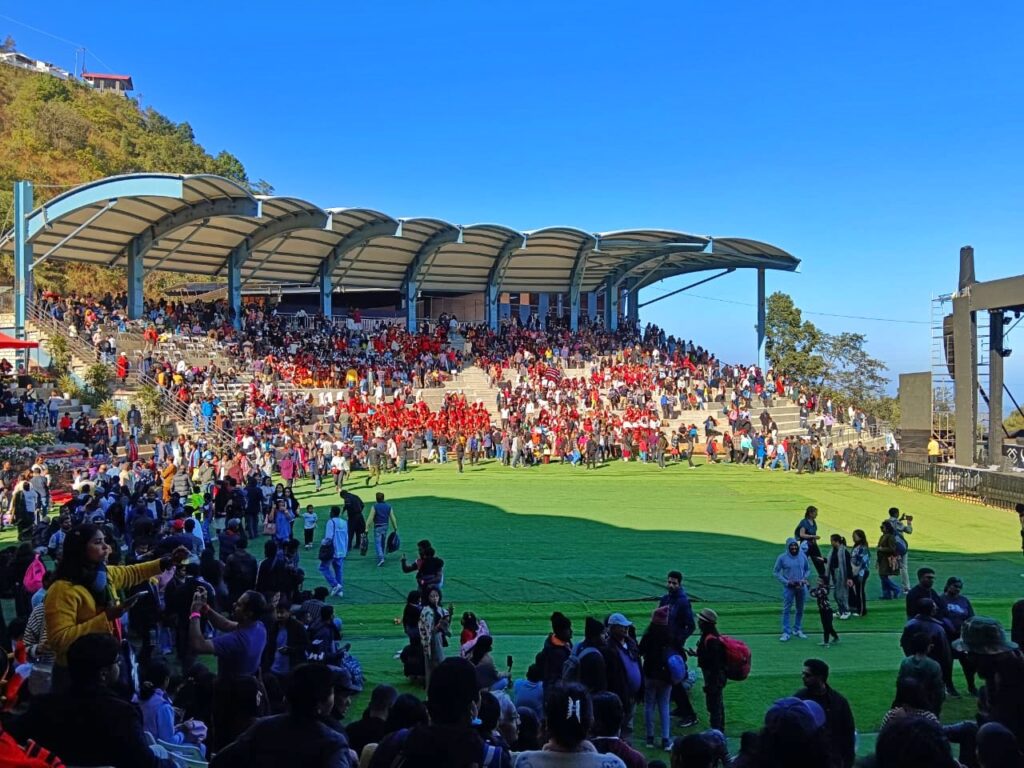
Nagaland's Hornbill Festival returns for its 27th edition from December 1 to 10, 2026, at the Naga Heritage Village in Kisama, about 12 km south of Kohima. Often called the "Festival of Festivals," it brings the state's tribal communities to one venue for ten days of dance, music, food, crafts and games, and it is one of the biggest draws for travellers to the Northeast every winter. If you are thinking of going, here is what the festival is, what happens there and what you need to sort out before you travel.
What is the Hornbill Festival?
The Nagaland government started the festival in 2000 to encourage interaction between the state's tribes and to promote Naga heritage to the rest of India and the world. Each Naga tribe has its own festivals tied to the farming calendar, and Hornbill gathers many of them into a single showcase. The opening day falls on December 1, which is also Nagaland's Statehood Day.
The name comes from the Indian hornbill, a bird revered in Naga folklore. The festival is about the culture the bird represents, not the bird itself.
What happens at Kisama
The heart of the festival is a ring of morungs, traditional wooden houses built by each tribe around the main arena. Visitors can walk through them, see how each community builds and decorates its homes, and often taste food and rice beer prepared inside.
The daily programme usually includes:
- Warrior dances and folk songs performed by troupes from different tribes
- Indigenous games and Naga wrestling
- Food stalls serving Naga cuisine and local rice beer
- Handloom, weaving and craft displays, with plenty to buy
- Crowd favourites like the chilli-eating contest
After dark, the action moves into Kohima, with a night carnival and evening music concerts in and around the town. If you liked our look at how festivals are changing after the pandemic, Hornbill is a good example of a state-run event that has grown into a tourism engine while keeping community performers at its centre.
What is new in 2026
Chief Minister Neiphiu Rio has chaired review meetings at Kisama in October, focusing on roads, power, water, security, traffic, parking and cleanliness, according to reports in The Sentinel and Hub Network. Officials have said that several countries are expected to take part and that a Northeastern state will be the partner state this year, though the state has not been named in reports so far.
Preparations have also included a large emergency-response drill at Kisama on November 21, involving the Army's Spear Corps, the NDRF, the SDRF and state health and disaster agencies, according to an IANS report. With hundreds of thousands of visitors expected over ten days, crowd safety is a big part of the planning.
Planning a trip: permits, stay and getting there
Inner Line Permit. Indian visitors from outside Nagaland need an Inner Line Permit (ILP) to enter the state. It can be applied for online on the Nagaland government's official ILP portal, a facility the state launched in 2019 specifically to make Hornbill travel easier. Apply in advance and carry a printed or digital copy along with your ID. Use only the official government site, not third-party agents.
Where to stay. IANS reported that hotels and guest houses in and around Kohima are fully booked for the festival period. If you have not booked yet, homestays in villages near Kisama are the realistic option, and they come with a closer look at local food and village life.
Getting there. Dimapur, in the plains, has the nearest airport and main railway station. From there, Kohima is a few hours away by road, and Kisama is a short drive further south. Traffic on the Kohima side is heavy during festival days, so leave buffer time.
Why it matters beyond tourism
The festival was set up to bring Naga communities together, and it still does that for performers and families who travel to Kisama each year. For local artisans, cooks and performers, ten days of large crowds also means a wider market and real income. And for the rest of India, it is one of the few chances to see the cultures of the Northeast presented by the communities themselves rather than through a filter. It sits alongside other journeys we have covered, like the new Saryu-Kamala Express, as a reminder of how much of India's cultural travel happens beyond the usual circuits.
If you are going, respect photography requests, ask before entering a morung, and remember that many performances are sacred traditions, not just shows. More culture explainers are in our Culture section.