On-Device AI: Why Your Phone Doesn’t Need the Cloud Anymore
For most of the last decade, asking a phone to do anything resembling AI meant sending your request to a data center and waiting for an answer. That's starting to change. Newer phones can run meaningful AI models directly on the device, no internet round-trip required.
What Changed
Two things moved at once: phone chips added dedicated processors built specifically for AI workloads, and researchers got much better at shrinking large models down without losing much capability. A model that once needed a server rack can now run, in a smaller form, on the same chip that powers your camera.
Why It Matters
Speed is the obvious win, nothing has to travel to a server and back. Privacy is the bigger one: photo searches, voice transcription, and text suggestions that run on-device never leave your phone, which matters a lot for anything involving personal data. It also means these features keep working with no signal, on a flight or in the mountains.
What's Still Cloud-Only
On-device models are smaller and less capable than the largest cloud systems, so heavier tasks, like generating a detailed image or reasoning through a complex problem, still get routed to a server. The pattern most phone makers have settled on is a hybrid: quick, private, everyday tasks stay local, and harder requests go to the cloud when you need the extra horsepower.
Where This Goes
As chips get more efficient, the line between what has to run in the cloud and what can run locally keeps moving toward the phone. The likely endpoint is a device that handles most day-to-day AI tasks itself and only reaches out to a server when it genuinely needs to.
What Changed in the Hardware
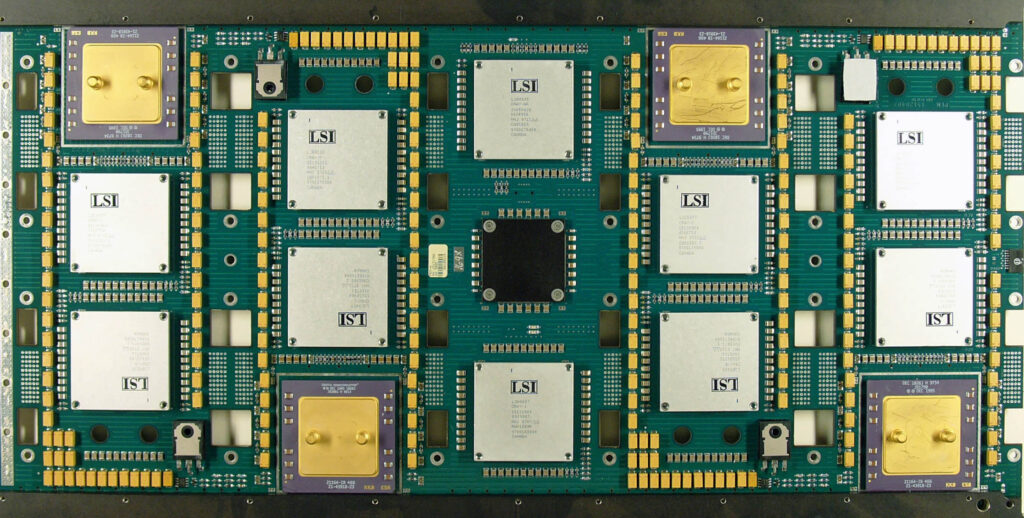
The shift to on-device AI rests on a specific piece of silicon: a neural processing unit, a chip section built to do the repetitive matrix arithmetic that machine learning models require. General-purpose processors can do this work, but slowly and at ruinous cost to battery life. A dedicated unit does it far faster while drawing a fraction of the power.
Alongside that, memory bandwidth improved. Running a model is largely a matter of moving weights around quickly, and for a long time phones simply could not shuttle data fast enough for anything substantial.
How Big Models Got Small
Hardware alone would not have been enough. Three techniques made models small enough to fit.
- Quantisation stores each number in the model at lower precision, cutting memory use dramatically for a modest accuracy cost.
- Distillation trains a small model to imitate a much larger one, transferring most of the capability into a fraction of the size.
- Pruning removes parts of the network contributing little, on the observation that most models are substantially larger than they need to be.
The Privacy Argument, Examined
On-device processing genuinely improves privacy, but the claim deserves precision. Data never leaving the device means no interception in transit, no server-side breach exposing it, and no retention policy to trust. For photo libraries, message content and voice recordings, that is a real and meaningful difference.
It does not mean nothing is collected. Apps can still transmit results, metadata or telemetry derived from local processing. On-device is a strong architectural guarantee about one specific risk, not a blanket promise.
The Hybrid Reality
No phone runs everything locally. What has emerged is a routing decision: quick, private, frequent tasks stay on device, while anything demanding more capability goes to a server. The interesting engineering question is who decides, and whether the user can see or control that boundary. Most implementations currently do not surface it at all.
What This Means in India
On-device capability matters more in places with expensive or unreliable data. Features that work on a train, in a basement or on a capped plan are worth more than the same features requiring constant connectivity. As the technology moves down from flagship phones into mid-range devices, that gap is where the practical benefit will actually land.